

How to correctly interpret the most debated test in prostate health
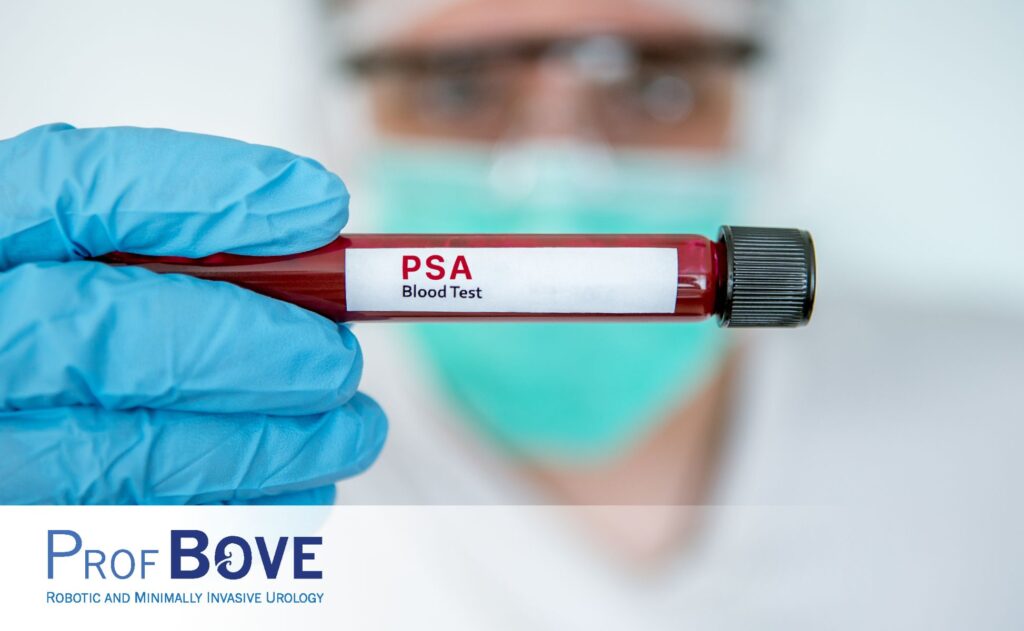
The PSA test (prostate-specific antigen) continues to generate discussion, doubts, and at times unjustified fears. Many men wonder whether it is truly useful, how often it should be performed, and what its real meaning is. Professor Pierluigi Bove clarifies that PSA still represents today the reference tool for prostate screening and monitoring, but it must be interpreted with expertise and contextualised within the overall clinical framework by the urologist. .
“PSA,” explains Professor Bove, “is an organ-specific marker, but not a disease-specific one. This means that a high value does not necessarily indicate cancer: it may be related to many other benign conditions.”
What PSA is
PSA is an enzyme belonging to the kallikrein family that is produced by the prostate and normally serves as an anticoagulant for semen. PSA can be measured in the blood, and its “normal” value generally falls within a range between 0 and 4 ng/ml. Attention, however: several conditions other than cancer—such as benign prostatic hyperplasia (BPH), inflammation (prostatitis), prostatic manipulation (massage, instrumental examinations), recent ejaculation, or intense physical activity (especially cycling)—can significantly alter its value.
Not the number itself, but its history
A common mistake is to consider a single PSA value. In reality, what matters is its trend over time, the size of the prostate, and the presence or absence of urinary symptoms. For this reason, PSA evaluation cannot be left to the patient or the general practitioner, but must be integrated and interpreted by the urologist.
“It is not the single value that tells us something,” Professor Bove specifies, “but its behaviour over time (PSA velocity, PSA doubling time). Sometimes we are interested in observing its evolution over two years, not over three or six months.”
A practical example: 10 ng/ml may be a “normal” value if it has already been observed and has remained substantially stable for many years. Conversely, 3.5 ng/ml may be suspicious if in previous years the value was much lower.
Mistakes to avoid: too often or too late
PSA should not be treated like a simple blood count that is repeated routinely. Performing it too frequently can generate false alarms, resulting in anxiety and unnecessary investigations. On the other hand, postponing it too long can delay important diagnoses.
According to the guidelines of the European Association of Urology (EAU), the frequency of testing depends on age, family history of cancer, and baseline values.
- A 50-year-old man with no family history and a very low PSA (for example 0.1 ng/ml) may repeat the test every two years.
- In individuals with a family history of prostate cancer, monitoring may begin earlier and be more frequent.
“Going for a PSA test for ‘precautionary’ purposes every 3–6 months has no meaning,” reiterates Professor Bove. “What matters to us is the long-term trend. The test must be planned thoughtfully and personalised to the patient.”
“Avoid measuring PSA during cystitis or prostatitis: test values will certainly be elevated, with the sole result of unnecessarily alarming the patient.”
The central role of the urologist
PSA alone is not sufficient to establish a diagnosis or to decide on potential therapeutic pathways. It serves to identify which patients require further second-level investigations (such as multiparametric MRI or biopsy) and which, instead, can simply be reassured and followed over time.
“The difference is made by the urologist,” observes Professor Bove, “who knows how to integrate that data with the clinical picture and other examinations.”
Between knowledge and peace of mind
The goal, therefore, is not only to diagnose potential conditions early, but also to avoid unnecessary tests, reduce healthcare costs, and above all restore peace of mind to the patient. Modern medicine must protect health while also safeguarding quality of life, balancing prevention and common sense.
“PSA remains a highly relevant tool,” concludes Professor Bove, “but it must be used intelligently, without myths or fears. It is a valuable ally when placed within a pathway guided by the urologist, who knows when further investigations are needed and when attentive and reassuring surveillance is sufficient.”
References:
PSA prostate, PSA test, prostate-specific antigen, normal PSA values, PSA interpretation, PSA changes over time, prostate marker, prostate cancer diagnosis, prostate cancer prevention, PSA monitoring, when to perform PSA, PSA frequency, prostate checks for men aged 50, prostate screening Rome, urology specialist Rome, European Association of Urology EAU guidelines, organ-specific marker, non–disease-specific marker, causes of elevated PSA, PSA and prostatic inflammation, prostatitis and PSA, benign prostatic hyperplasia PSA, PSA test and cancer risk, preventive urology visit, PSA follow-up, clinical interpretation of PSA, role of the urologist in PSA, personalised prostate medicine, clinical common sense in urology, human-centred preventive approach, Prof. Pierluigi Bove, prostate health expert Rome, early prostate diagnosis, male quality of life, doctor–patient communication, informed male prevention.

