
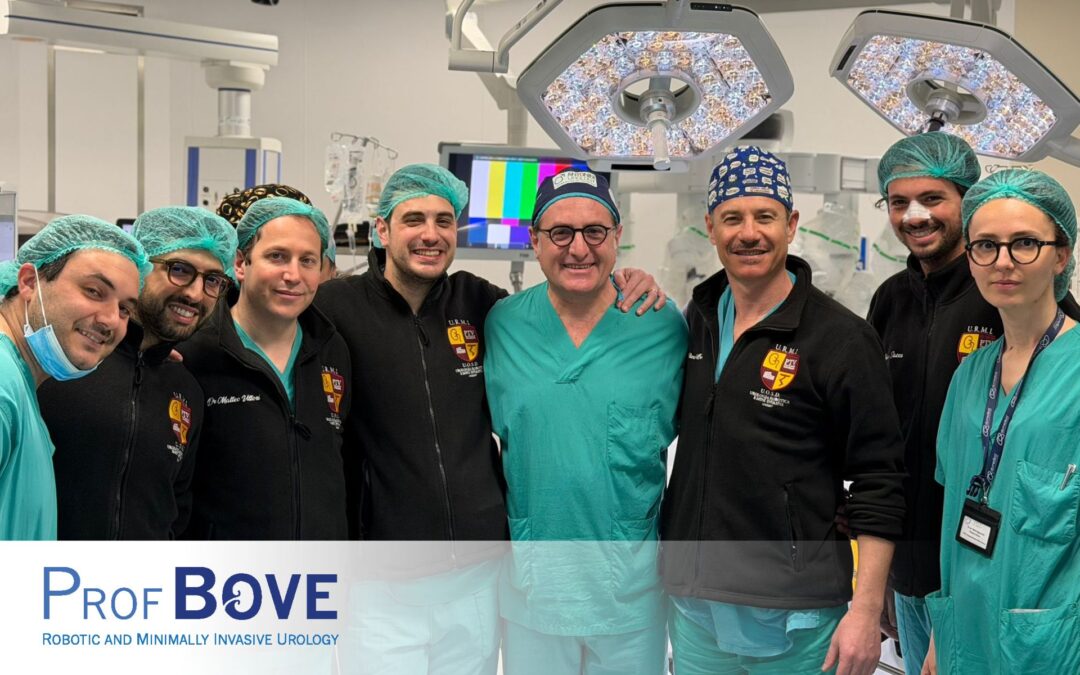
Two procedures in a single session: orthotopic neobladder reconstruction and penile prosthesis implantation after robotic cystectomy.
This procedure, performed by Professor Pierluigi Bove, Director of the Robotic Surgery Unit at Policlinico Tor Vergata, together with Professor Gabriele Antonini, one of the leading international experts in inflatable penile prostheses, highlights a very concrete clinical point: treating the disease while, when appropriate, addressing functional outcomes within the same care pathway—outcomes that can significantly affect daily life.
As reported by Adnkronos, at Policlinico Tor Vergata in Rome a combined, single-session procedure was carried out on a 70-year-old patient with non-metastatic muscle-invasive bladder cancer. The operation included a robotic cystectomy with orthotopic neobladder reconstruction and the simultaneous implantation of a three-piece inflatable penile prosthesis.
What deserves attention is not the “sum” of two procedures, but the rationale for an integrated approach. In selected cases, it may be possible to treat the oncologic condition and, at the same time, address a functional consequence that is common after major pelvic surgery.
Why an integrated approach can be appropriate
Cystectomy for bladder cancer is a complex operation and, in some cases, it also involves removal of the prostate. In that scenario, the risk of severe erectile dysfunction is very high. For the patient, this is not a marginal issue. It can affect identity, relationships, and quality of life after treatment.
Professor Pierluigi Bove summarizes it this way: “Robotic surgery allows us to be extremely precise from an oncologic standpoint, without neglecting the patient’s future quality of life.”
Orthotopic neobladder: what it means, briefly
After bladder removal, orthotopic neobladder reconstruction may be indicated for selected patients. Put simply, a new urinary reservoir is created using a segment of bowel and connected to the urethra, with the aim of maintaining urination in a way that is as close as possible to the natural pathway.
This option requires careful assessment. It is not suitable for everyone and must be defined on the basis of oncologic, clinical, and functional criteria.
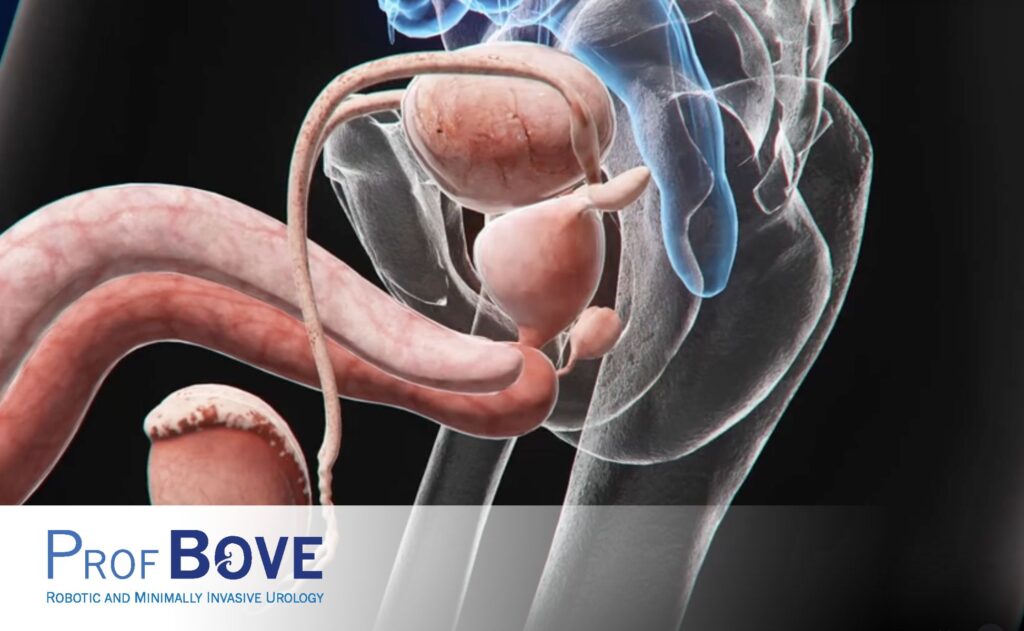
Simultaneous penile prosthesis: what changes for the patient
The aim is not to “move up” prosthesis implantation by default, but to understand whether, in a specific case, performing it during the same oncologic operation is truly useful. A simultaneous implant may avoid a second surgery months—or even years—later and reduce the length of time a patient has to cope with erectile dysfunction that is already predictable after extensive pelvic oncologic surgery.
In addition, when erectile function cannot be recovered satisfactorily with conservative treatments, a prosthesis can represent a definitive solution. Here too, the key concept is appropriateness. This is not an option for everyone, but a possibility to consider when there are clear indications and realistic expectations.
A clear clinical direction
This approach reflects a simple principle: in pelvic cancers, especially when surgery is extensive, planning should not stop at the oncologic procedure itself. It should also include what comes after, anticipating common consequences and discussing them with the patient in a transparent way.
Every case must be evaluated individually, with surgical expertise and team-based decision-making, to determine whether this pathway is appropriate for that patient. The value of this pioneering operation lies in its clinical message: when conditions are favorable, addressing the oncologic surgery and the resulting functional aspects within the same pathway can make the postoperative course clearer and more manageable for the patient.
Full article (source: Adnkronos): https://lnkd.in/du9hBNt6
References:
bladder cancer, muscle-invasive bladder cancer, robotic cystectomy, pelvic oncologic surgery, orthotopic neobladder, bladder reconstruction, quality of life after cystectomy, erectile dysfunction after pelvic surgery, three-piece inflatable penile prosthesis, penile prosthesis after cystectomy, robotic urologic surgery, integrated urology care pathway, functional recovery after oncologic surgery, Policlinico Tor Vergata, URMI, Prof. Pierluigi Bove, urologic oncology in Rome, medical communication

